
Packaging windows help consumers see a product before purchasing, making them one of the most effective features for retail packaging. Whether you’re producing food cartons, cosmetics packaging or premium gift boxes, choosing the correct windowing process affects production speed, costs, material selection and overall design.
The two main manufacturing methods are patch windowing and pick & place windowing. While both attach transparent film or plastic to a folding carton, they are designed for very different applications.
While both put film onto cardboard, their engineering, design limits, and costs are vastly different. Here is how to choose the right one for your next packaging run.
Why use a window in folding carton packaging?
- product visibility
- customer confidence
- shelf appeal
- reduced need to open packaging
- premium appearance
- recyclable and biodegradable options
- What is a Patch Window? (The High-Speed Standard)
Patch windowing is the traditional, high-speed method used for the vast majority of retail cartons.
- How it works: The windowing machine pulls a continuous web of transparent film (like PET or OPP) from a large roll. It applies glue around the carton’s die-cut opening, cuts the film to the exact length from the roll inline, and presses it down flat.
- Best for: Flat, single-panel surfaces.
- Typical products: Pasta boxes, standard toy packaging, high volume retail packaging and bakery boxes.
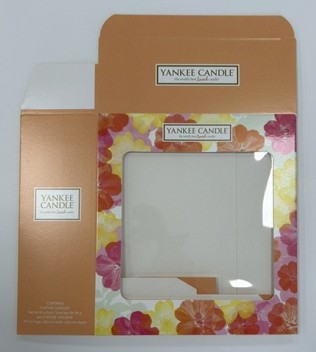
The Pros:
- Unmatched Speed: Standard patch window machines can run thousands of blanks per hour.
- Lower Unit Cost: Materials are fed from bulk rolls, minimizing prep costs and waste.
- Simplicity: Ideal for high-volume, straightforward production runs.
The Cons:
- Design Limitations: Limited to flat surfaces. They are not ideal for windows that need to fold around the corners of a box.
- What is a Pick & Place Window? (The Premium Precision Tool)
Pick & place windowing uses robotic or rotary suction arms to handle individual pieces of material with extreme spatial accuracy.
- How it works: Instead of cutting film from a continuous roll inline, the machine “picks” pre-cut, pre-creased, or rigid plastic blanks from a hopper. It then precisely “places” them onto specific, sometimes complex areas of the carton blank.
- Best for: Structural inserts, rigid clear lids, and 3D windows that wrap around edges.
- Typical products: Luxury cosmetics, high-end electronics, gift sets, and intricate multi-panel display boxes.
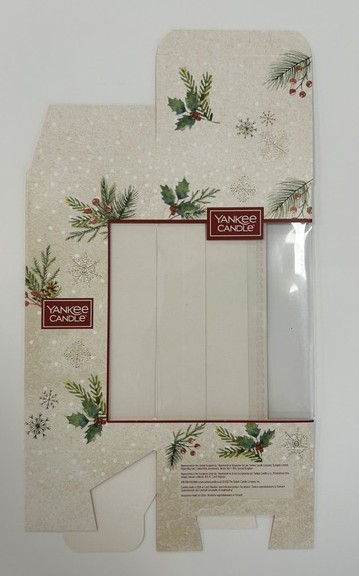
The Pros:
- Complex Geometry: Can effortlessly handle windows that fold across multiple scores, creases, and panels (e.g., a window that wraps from the front to the side of the box).
- Material Thickness: Can apply heavier, more rigid plastics that cannot be wound tightly onto a standard film roll.
- Intricate Placement: Perfect for internal trays or structures glued inside a deep pocket.
The Cons:
- Slower Cycle Times: The physical movement of picking and placing individual units makes this process slower than continuous roll-feeding.
- Higher Cost: Requires custom pre-cut window components and more complex machine programming.
Frequently Asked Questions
Can patch windows wrap around corners?
Not ideal. Patch windows are designed for flat panels. If the window needs to continue across folds or corners, pick & place windowing is usually the best option.
What film is used for packaging windows?
Most windowed cartons use PET or OPP films, depending on the application and recycling requirements.
Is pick & place windowing more expensive?
Yes. It involves pre-cut components and slower production speeds, making it better suited to premium packaging.
Are windowed cartons recyclable?
Many are, depending on the board, adhesive and film combination.
Choose Patch Windowing if…
Your design is a straightforward rectangle, circle, or custom shape that sits entirely on one flat face of the box, and you need to scale production into the units affordably.
Choose Pick & Place Windowing if…
Your window needs to wrap around a corner, provide a 360-degree view of the product, or requires a thick, premium rigid plastic that gives structural support to a luxury folding carton.
Final Thoughts
Choosing between patch windowing and pick & place windowing comes down to balancing design ambitions with manufacturing efficiency. For high-volume retail cartons, patch windowing is often the most economical option. For luxury packaging or structural window designs, pick & place offers the flexibility needed to create standout packaging.
If you’re developing a new folding carton, ABC Packaging Ltd can advise on the most suitable windowing process before production begins, helping you optimise both design and manufacturing costs.