
Sustainability is now a priority for businesses across the UK, and packaging is one of the most visible places to make a difference. Your customers, regulators and supply chain partners all expect more environmentally responsible packaging. But with so many terms in use, it isn’t always clear what they actually mean.
Two of the most commonly confused terms are recyclable and biodegradable. Both are linked to reducing environmental impact, but they work in very different ways and suit different situations.
We believe good decisions start with clear facts. In this guide, we explain the difference between recyclable and biodegradable packaging, the benefits of each, and how to choose the right sustainable packaging for your business.
What is recyclable packaging?
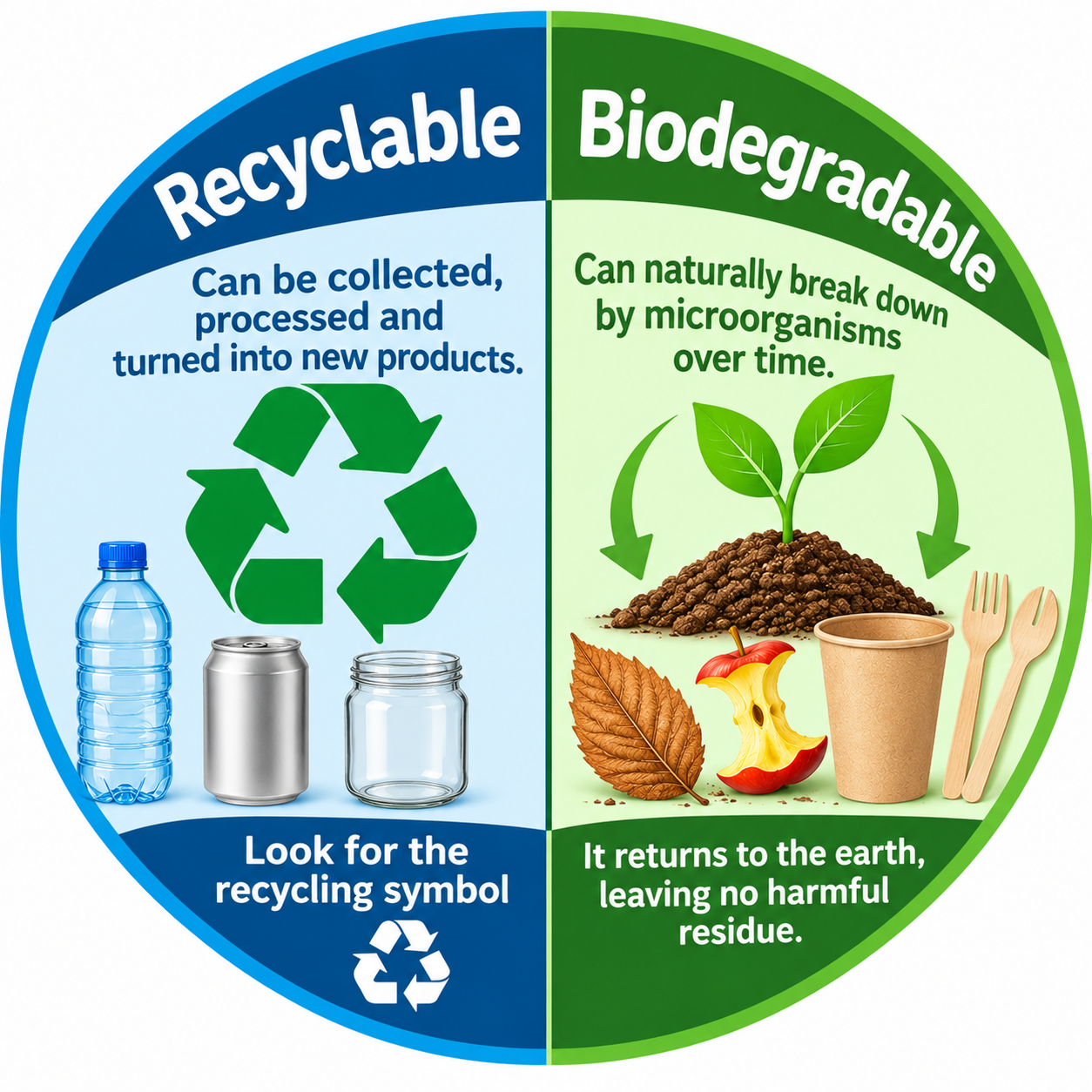
Recyclable packaging is designed to be collected, processed and turned into new products after use. Instead of becoming waste, the material goes back into the manufacturing cycle, helping to conserve natural resources and reduce landfill.
Common recyclable packaging materials include:
- Corrugated cardboard
- Paper
- Solid board
- Vacuum formed RPET (recycled PET) plastics
How well recyclable packaging works depends on more than the material itself. It also needs to be sorted correctly and accepted by local recycling facilities, so clear disposal guidance for your customers makes a real difference.
Benefits of recyclable packaging
- Reduces the amount of waste sent to landfill
- Supports the circular economy by keeping materials in use
- Often contains recycled content, reducing demand for virgin materials
- Widely recognised and understood by businesses and consumers
- Helps you meet your sustainability targets and reporting requirements
What is biodegradable packaging?
Biodegradable packaging is designed to break down naturally through the action of microorganisms such as bacteria and fungi. Over time, it decomposes into natural substances, including water, carbon dioxide and biomass.
It’s important to know that “biodegradable” doesn’t necessarily mean a material will break down quickly, or in any environment. Some materials, particularly plant-based plastics, need specific conditions such as an industrial composting facility to decompose efficiently.
Examples of biodegradable packaging materials include:
- Certain plant-based plastics
- Paper products
- Cardboard
- Moulded fibre packaging
- Some starch-based materials
You’ll notice that paper and cardboard appear on both lists. These fibre-based materials are both recyclable and biodegradable, which is one reason they remain such a popular choice.
Benefits of biodegradable packaging
- Can reduce long-term environmental impact when disposed of correctly
- Useful where recycling isn’t practical
- Often made from renewable resources
- May appeal to environmentally conscious customers
Biodegradable vs compostable: are they the same?
Not quite. All compostable packaging is biodegradable, but not all biodegradable packaging is compostable. Compostable packaging is certified to break down within a set timeframe under composting conditions. In the UK and Europe, industrial compostability is usually shown by certification to the standard EN 13432.
If you’re considering compostable or biodegradable plastics, check whether your customers can actually access the right disposal route. These materials generally shouldn’t go in household plastic recycling, as they can contaminate the recycling stream.
Recyclable vs biodegradable packaging: key differences
Both options support sustainability, but they achieve it in different ways.
| Recyclable packaging | Biodegradable packaging |
|---|---|
| Designed to be processed into new products | Designed to decompose naturally |
| Supports repeated use of materials | Returns material to the environment after decomposition |
| Depends on recycling infrastructure | Often depends on composting or suitable environmental conditions |
| Helps conserve raw materials | Helps reduce long-term waste when disposed of correctly |
Which packaging is best for your business?
There’s no one-size-fits-all answer. The right packaging for your business depends on several factors, including:
- The products you ship and display
- How your customers are likely to dispose of the packaging
- Your sustainability objectives
- The protection and performance your products need
- Cost and supply chain considerations
For many UK businesses, recyclable packaging remains the most practical and widely accepted option, thanks to established recycling systems. In other cases, biodegradable or compostable materials may be a better fit, particularly where packaging is likely to be contaminated by food or where recycling is unlikely.
The most sustainable choice is usually the one that balances product protection, efficient transport, responsible disposal and minimal environmental impact.
Looking beyond the label
It’s easy to assume biodegradable packaging is automatically the greener choice, but sustainability is more complex than a single label. When you review your packaging, it helps to consider:
- The full lifecycle of the packaging
- Manufacturing impacts
- Transport efficiency, including weight and pack size
- End-of-life disposal
- Local waste management infrastructure
Looking at these factors together can deliver better environmental outcomes while keeping your operations efficient. It can also help you prepare for UK regulations such as packaging Extended Producer Responsibility (EPR) and the Plastic Packaging Tax.
Frequently asked questions
Is biodegradable packaging better than recyclable packaging?
Not always. Biodegradable packaging only delivers its benefits when it’s disposed of in the right conditions. Recyclable packaging is often the more practical option because UK recycling systems are well established.
Is cardboard recyclable or biodegradable?
Both. Cardboard is widely recycled in the UK and will also biodegrade naturally, making it one of the most versatile sustainable packaging materials.
Can biodegradable plastics go in the recycling bin?
Generally, no. Biodegradable and compostable plastics can contaminate conventional plastic recycling, so always follow the disposal guidance on the packaging.
Find the right sustainable packaging
Choosing sustainable packaging doesn’t have to be complicated. Whether you want to increase your use of recyclable materials, explore biodegradable alternatives or optimise your current packaging strategy, the right solution starts with understanding your business needs.
Here at ABC Packaging, we work with you to provide high-quality packaging that protects your products and supports your long-term sustainability goals.
If you’re reviewing your packaging strategy, our team is here to help you find practical, cost-effective solutions that meet your operational and environmental objectives. Get in touch with us today to discuss your requirements.